November 3, 2026 · beer · lager · IPA · stout · beer styles · November 2026
Lager vs Ale vs IPA vs Stout: Beer Styles for Cold Nights
Where Molson Canadian, Heineken, Corona and Stella fit, what changes with pilsners, pale ales, IPAs, stouts and porters, how strength changes your drink count, and what to buy for a mixed crowd.
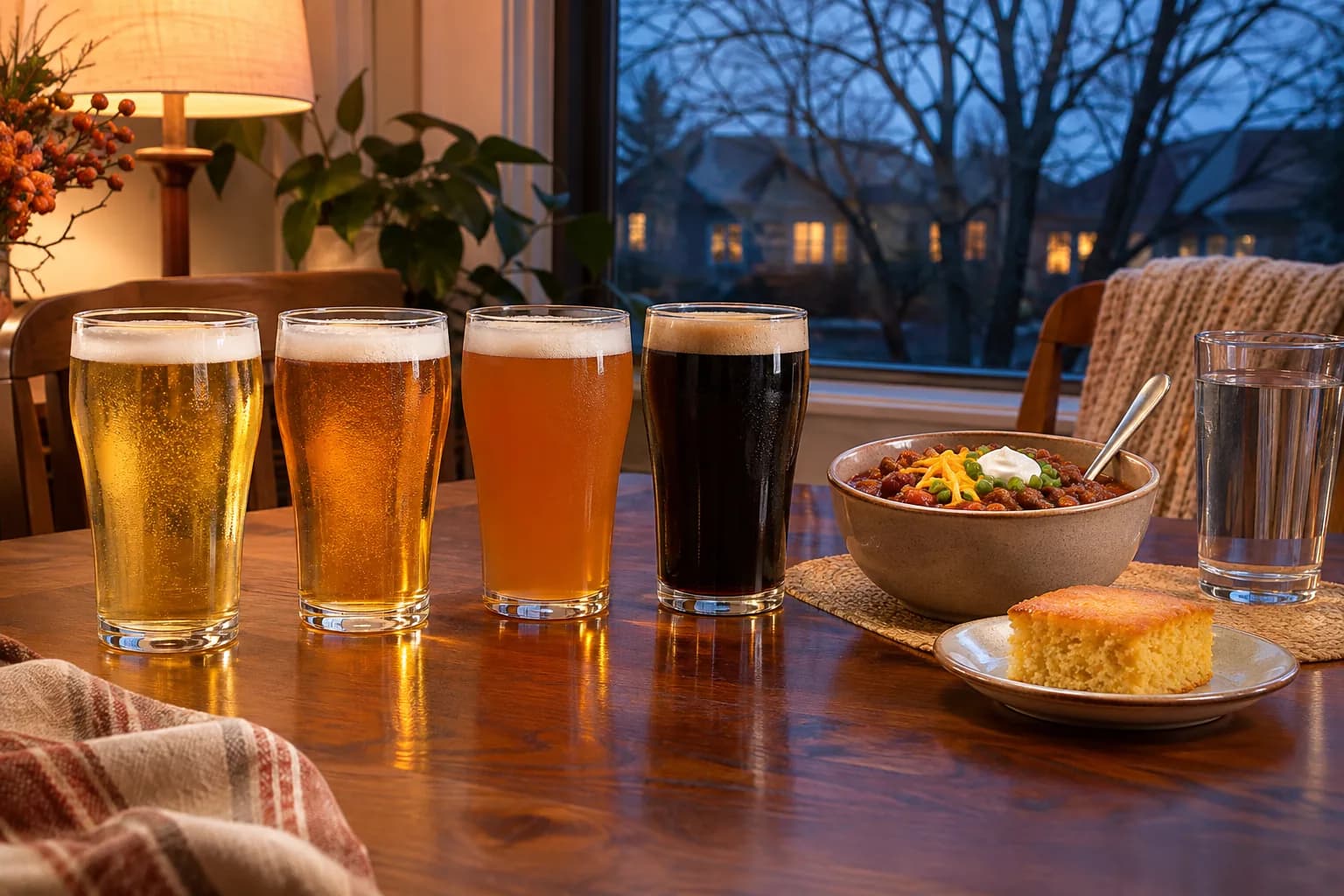
Lager vs ale comes down to yeast. Lagers are fermented cool with a yeast that leaves the beer clean and crisp, and ales are fermented warmer with a yeast that can add fruity or spicy flavours. Pilsners are lagers. Pale ales, IPAs, stouts and porters are all ales. Colour, bitterness and strength come from the malt, the hops and how much of each the brewer uses, not from the ale or lager label.
That means most of what lands in a typical GTA beer order is lager: Molson Canadian, Heineken, Corona, Stella Artois, Budweiser. With the clocks gone back on Sunday and the evenings dark by dinner, this is when people start asking about something darker. Below we place the big names, explain pale ales, IPAs, stouts and porters, cover the strength gap that changes how many drinks are in a can, and finish with food pairings and a simple split for a mixed crowd. The images are original editorial illustrations.
The one difference that matters: lager yeast vs ale yeast
According to the Homebrewers Association's explainer on ale vs lager, ales use <em>Saccharomyces cerevisiae</em>, a "top-fermenting" yeast that works at roughly 16 to 26°C. Lagers use <em>Saccharomyces pastorianus</em>, a "bottom-fermenting" yeast that works at about 9 to 14°C. Lagers then get an extra cold rest, the "lagering" the style is named after, of at least two to three weeks near 0°C.
Here's what that does in the glass. Cold fermentation rarely produces the fruity and spicy compounds yeast can make, so lagers taste crisper and smoother. Warmer ale fermentation lets some of that fruit and spice through, and in many styles that's the point.
Colour isn't the test. There are dark lagers and very pale ales, and a few styles blur the line, such as Kölsch, which uses ale yeast at cool, lager-like temperatures. So if someone tells you they "don't like ale", ask what they actually tried. It was probably a bitter IPA, not ale as a whole.
Where the big-name beers fit (Canadian, Heineken, Corona, Stella)
Every one of the best-known beers in our beer range is a lager. The Beer Judge Certification Program, whose style guidelines we quote throughout this post, describes International Pale Lager as "a highly-attenuated pale lager without strong flavors, typically well-balanced and highly carbonated", and lists Heineken and Corona Extra among its examples. Here's how the familiar names line up. The percentages are the typical strength on Canadian labels, so check the can or bottle for the exact figure.
- <strong>Molson Canadian (5%):</strong> a clean, crisp Canadian pale lager. Light on bitterness, easy with almost any food.
- <strong>Heineken (5%):</strong> a pale lager with a little more bitterness at the finish.
- <strong>Corona Extra (4.6%):</strong> the lightest-tasting of the group and the lowest in alcohol, usually served with a lime wedge.
- <strong>Stella Artois (5%):</strong> a Belgian pilsner with a slightly malty character and a dry finish.
- <strong>Budweiser (5%):</strong> a classic American lager, clean and easy-drinking.
None of this is a knock on lager. These beers are built to be refreshing and to sit quietly next to food, which is why they're the safe default for a crowd.
Pilsner, pale ale and IPA: what changes in the glass
Pilsner vs lager
A pilsner is a type of lager. Every pilsner is a lager, but not every lager is a pilsner. The BJCP's German Pils guideline calls it "a pale, dry, bitter German lager featuring a prominent hop aroma", usually 4.4 to 5.2% alcohol, with more hop character, malt flavour and bitterness than an international pale lager. If a regular lager tastes a bit plain to you, a pilsner is the next step without leaving lager behind.
Pale ale
Switch to ale yeast and push the hops forward and you get a pale ale. The BJCP describes the American version as an "average-strength, hop-forward, pale American craft beer", typically 4.5 to 6.2%. Expect more aroma (citrus, pine, tropical fruit, depending on the hops) and a bitterness you'll notice, but not one that takes over.
IPA vs lager
An IPA takes the pale ale further. The BJCP's American IPA is "decidedly hoppy and bitter, moderately strong", usually 5.5 to 7.5% alcohol. Next to a lager, two things change: the bitterness is much higher, and so is the alcohol. The first is a matter of taste. The second matters for counting drinks, which we get to below.
Stout vs porter: the dark beers of November
So, what is a stout? It's a dark ale made with roasted grains, which give coffee and dark chocolate flavours. The BJCP's Irish Stout guideline sums it up as "a black beer with a pronounced roasted flavor, often similar to coffee", and lists Guinness Draught as an example. The same guideline notes that Guinness was brewing only porter by 1799 and began brewing a "stouter kind of porter" around 1810, which is where the name comes from.
Porter vs stout today: porters tend to be brown rather than black, with more chocolate and caramel and a softer roast. Stouts are darker and lean harder on that roasted, coffee-like edge. The BJCP describes American porter as "less strong and assertive" than American stout. There's a lot of overlap, though, and brewers label their beers as they see fit, so read the description on the can as well as the style name.
Dark doesn't mean strong. An Irish stout typically sits at 3.8 to 5% alcohol, which puts it level with or below most lagers. Imperial stouts are a different beer entirely: "very strong, very dark", in the BJCP's words, at 8 to 12%. Those are for small pours, slowly, often after dinner.
ABV matters: why a 7% IPA isn't the same as a 5% lager
Health Canada defines a standard drink as 17.05 ml of pure alcohol, which is one 341 ml bottle of 5% beer. Craft beer often comes in 473 ml tall cans at higher strength, and the numbers add up quickly.
| Serving | Typical style | Standard drinks |
|---|---|---|
| 341 ml bottle at 5% | Lager | 1 |
| 330 ml bottle at 4.6% | Lighter lager such as Corona | About 0.9 |
| 473 ml tall can at 5% | Lager or Irish stout | About 1.4 |
| 473 ml tall can at 7% | IPA | About 1.9 |
| 473 ml tall can at 8% | Double IPA | About 2.2 |
| 355 ml can at 10% | Imperial stout | About 2.1 |
So a guest who has three tall cans of 7% IPA has had close to six standard drinks, not three. Read the alcohol on the label before you count, and pour stronger beers into a glass so they're sipped rather than knocked back. Canada's Guidance on Alcohol and Health, from the Canadian Centre on Substance Use and Addiction, counts in the same standard drinks, and it's a useful reference when you're planning how much to put out.
Beer and food: chili, wings, stews and roasts
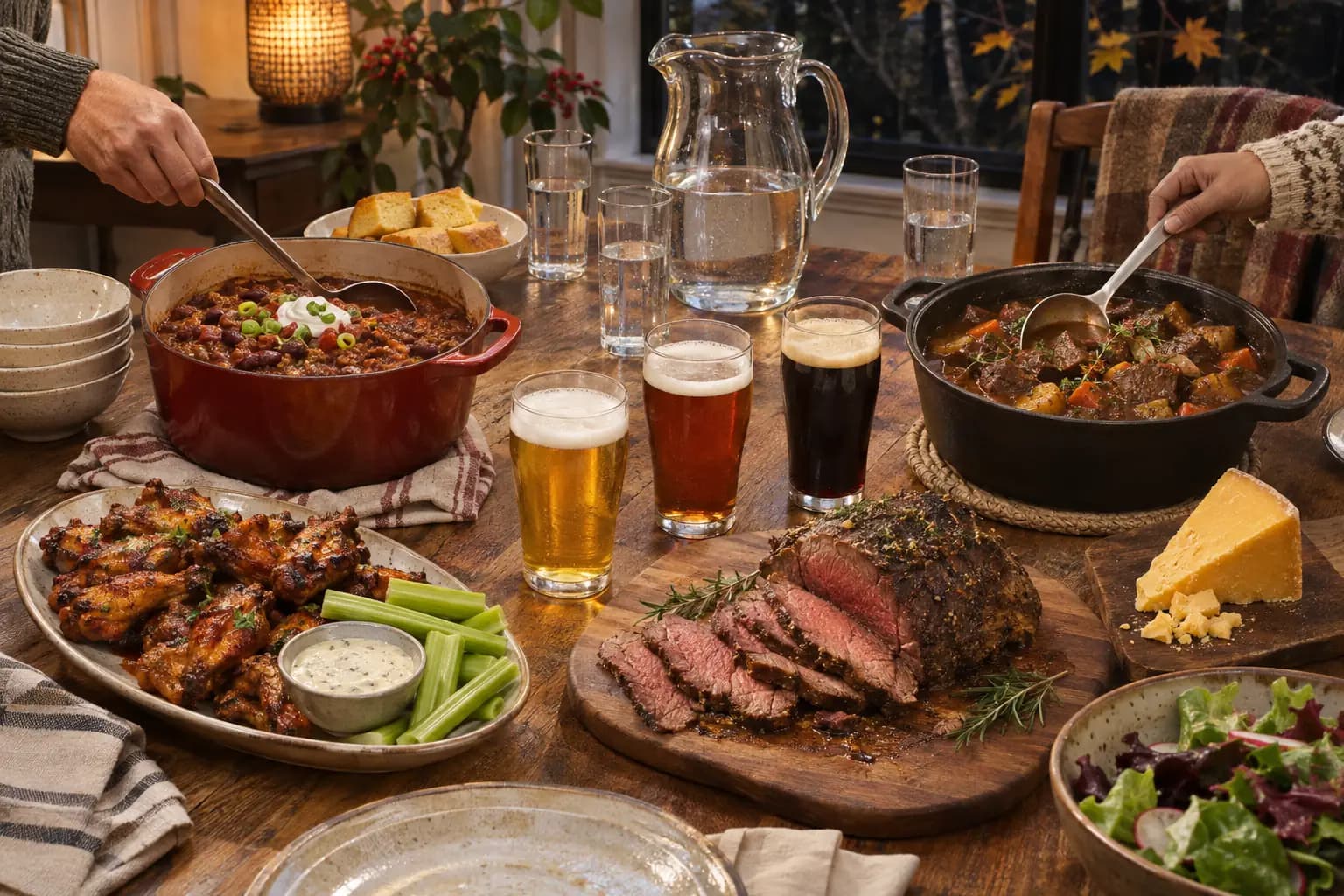
These are our own pairing suggestions for comfort-food season, not a claim that J&J stocks every style mentioned. The general idea: lagers refresh and reset, hoppy beers stand up to spice and fat, and dark beers match roasted, browned flavours.
| Dish | Easy pick | If you want more flavour |
|---|---|---|
| Chili | Crisp lager such as Corona or Molson Canadian | Porter, whose chocolate notes suit cumin and smoked chili |
| Hot wings | Pale lager, very cold | Pale ale; we'd skip the most bitter IPAs with very hot sauce |
| Beef stew or shepherd's pie | Stella Artois or another malty lager | Irish stout |
| Roast chicken | Pilsner | Pale ale |
| Roast beef or pork | Heineken or another pale lager | Porter or stout |
| Aged cheddar | Pilsner | IPA |
| Chocolate dessert | Coffee or tea | A small pour of stout or imperial stout |
Put a jug of water on the table next to the beer. With salty, spicy food, people reach for whatever is cold and closest, and it's better if that's water some of the time.
Buying for a mixed crowd: a simple split
Most groups have a few people who just want a lager, one or two who want to try something different, and someone who isn't drinking. Here's the split we'd start from.
- <strong>About two-thirds lager:</strong> one or two familiar names such as Molson Canadian, Heineken or Stella. This is what gets finished.
- <strong>About a third dark or hoppy:</strong> a stout or porter in November, plus a pale ale or IPA if your group likes hops. Six-packs are the right size here, since not everyone will try them.
- <strong>Alcohol-free drinks on top of that:</strong> non-alcoholic beer, sparkling water or soft drinks, enough that drivers and non-drinkers have more than one option.
For quantities, our party drinks calculator guide works out beers per guest by the length of the evening. If you're in the west end, our page on beer delivery in Etobicoke covers the area. Our beer 12-packs are all lagers, and six-packs are ordered by phone or WhatsApp, so call (437) 328-0030 to check what's available before you plan around a particular stout or IPA. For a wider look at craft styles, see our list of craft beers to try.
We deliver 24/7 across the GTA, and delivery is free on orders over $150. Our drivers check ID at the door: whoever receives the order must be 19 or older with valid photo ID. Settle the ride home before the first beer is opened.
FAQ: Is Guinness heavy? Are stouts stronger? Does beer go stale in the fridge?
Frequently Asked Questions
Is Guinness heavy?
It looks heavier than it is. Guinness Draught is an Irish stout, a style the BJCP puts at 3.8 to 5% alcohol with a medium-light to medium-full body. The creamy texture comes mostly from the nitrogen pour. Check the label for the exact alcohol on the can you're buying.
Are stouts stronger than lagers?
Not as a rule. Irish stouts usually sit at or below a typical 5% lager. Imperial stouts are the exception at 8 to 12%, so check the label before you pour.
What's the difference between lager and ale in one sentence?
Lager is fermented cool with bottom-fermenting yeast and cold-aged, which gives a crisp, clean taste, while ale is fermented warmer with top-fermenting yeast, which can add fruity or spicy notes.
Does beer go stale in the fridge?
Sealed beer doesn't spoil the way food does, but its flavour fades over time, and hoppy beers like IPAs lose their aroma fastest. Keep beer cold and out of the light, since light is what makes beer taste skunky, and check any date printed on the can or box. An opened can or bottle goes flat within hours, so don't save it for tomorrow; open one only when you want it.
What's a good beer for someone who doesn't like beer?
Start light: a pilsner or a Corona with lime. Some people who dislike bitterness enjoy a porter, because its chocolate and caramel flavours read as less bitter than an IPA.
Can I get beer delivered tonight?
Yes. We deliver across the GTA 24/7, including weekends and holidays. The person receiving the order must be 19 or older with valid photo ID, which our drivers check at the door.
Ready to stock up for a cold night in? Browse our beer selection, or call or WhatsApp (437) 328-0030 if you'd like help putting together a mixed order.
By J&J Alcohol Delivery
Back to BlogKeep Reading
More Articles
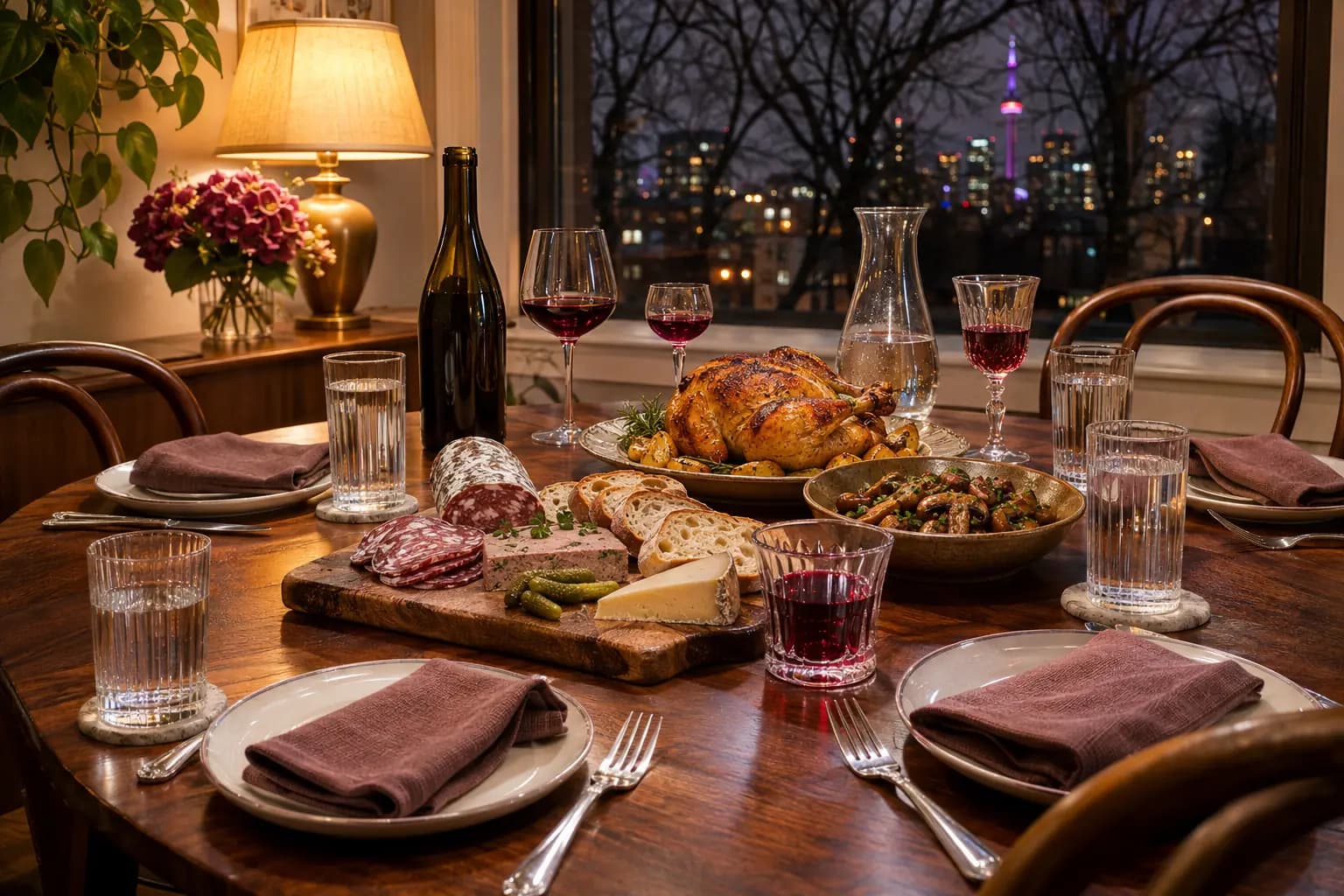
Beaujolais Nouveau
Beaujolais Nouveau 2026 and Ontario Gamay: What It Is, When It Arrives and What to Serve It With
Beaujolais Nouveau 2026 is released Thursday, November 19. What it is, how it differs from Beaujolais-Villages…

Grey Cup
Grey Cup Party at Home: Beer, Batch Drinks and Food for a GTA Watch Party (2026 and Next Year)
The 113th Grey Cup kicks off Sunday, November 15 at 6 p.m. ET. How much beer to buy for the evening, a batch C…