
August 12, 2026 · tequila · mezcal · agave · spirits · guide
Tequila vs Mezcal: What’s the Difference?
All tequila is mezcal, but not all mezcal is tequila. Here is what actually separates them — the agave, the cooking method, the smoke — and which one you want tonight.
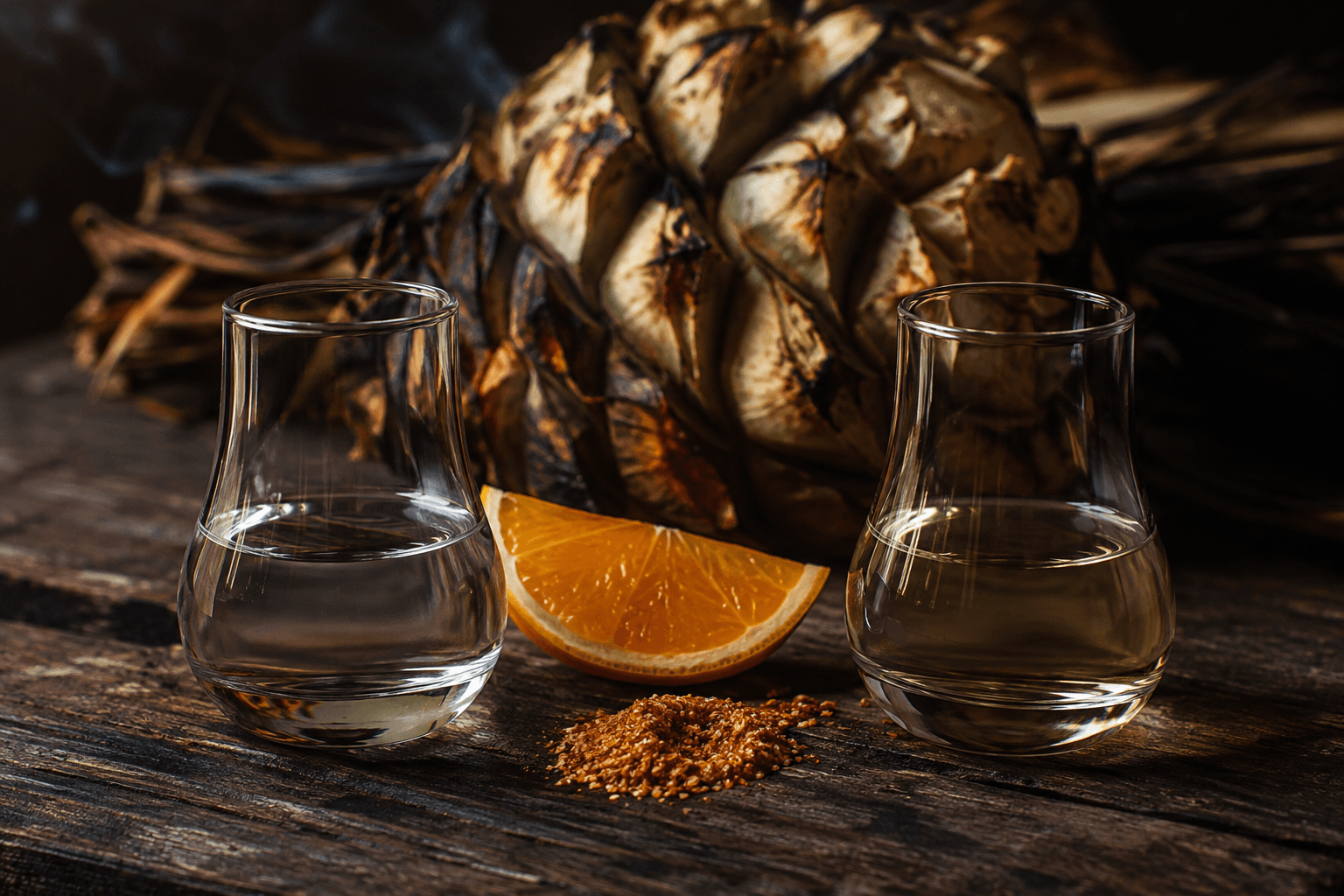
There is a line that gets repeated in every bar in the city and it happens to be true: all tequila is mezcal, but not all mezcal is tequila. Both are agave spirits from Mexico, both are protected by designation of origin, and one is technically a subcategory of the other. What separates them in the glass comes down to three things — which agave, which region, and how the agave is cooked.
That third one is where the smoke comes from, and it is the difference most people actually taste.
| Factor | Tequila | Mezcal |
|---|---|---|
| Agave | Blue Weber only | 30+ varieties, mostly espadin |
| Region | Jalisco plus parts of 4 states | 9 states, around 85% from Oaxaca |
| Cooking | Steamed in ovens or autoclaves | Roasted in earthen pits over wood |
| Flavour | Bright, peppery, vegetal | Smoky, earthy, highly variable |
| Best for | Margaritas, Palomas, sipping | Slow sipping, splitting a cocktail base |
The agave
Tequila can only be made from one plant: blue Weber agave. One species, no substitutions. That single-varietal rule is a large part of why tequila is so consistent from bottle to bottle and brand to brand — you know roughly what you are getting.
Mezcal can be made from more than 30 permitted agave varieties. Espadín accounts for the overwhelming majority of what reaches export markets, but tobalá, tepeztate, arroqueño and others all appear. Some take more than a decade to mature before they can be harvested. This is why mezcal varies so enormously and why two bottles labelled mezcal can taste almost nothing alike.
The region
Tequila is made in the state of Jalisco plus limited municipalities in four others — Guanajuato, Michoacán, Nayarit and Tamaulipas. The town of Tequila itself sits in Jalisco, in the highlands northwest of Guadalajara.
Mezcal has a much wider protected zone covering nine states, with Oaxaca producing the vast majority — somewhere around 85 percent of it. Production there remains far more small-scale and artisanal than the industrial operations behind the big tequila brands.
The cooking method, and where the smoke comes from
This is the real answer to the question. Before agave can be fermented, the piña — the dense heart of the plant — has to be cooked to convert its starches into fermentable sugars. How that cooking happens defines the spirit.
Tequila producers steam the piñas in brick ovens or industrial autoclaves. It is a clean, controlled process that preserves the bright, vegetal, peppery character of the raw agave. Nothing in it introduces smoke.
Mezcal producers roast the piñas in earthen pits lined with hot volcanic rock, covered with agave fibre and earth, over wood fires that burn for three to five days. The agave sits in direct contact with smoke and hot stone that entire time. That is where mezcal’s smokiness comes from — it is not an additive or a finishing step, it is baked into the raw material before fermentation even begins.
How they taste
Good blanco tequila tastes of cooked agave, white pepper, citrus and a faint minerality. Highland Jalisco tequilas lean sweeter and more floral; lowland ones lean earthier and more peppery. It is bright and direct.
Mezcal is smokier, earthier and considerably more variable. Underneath the smoke there is usually roasted agave, green herbs, sometimes tropical fruit, sometimes a mineral or almost savoury edge. It rewards slow drinking and is generally the more challenging of the two on a first encounter.
The ageing categories
Both spirits use broadly the same ageing vocabulary, and the categories mean the same thing in each.
Blanco or joven
Unaged, or rested under two months. This is where the agave character is loudest, and it is the category most cocktail bartenders reach for. Patrón Silver and Casamigos Blanco are both clean, approachable examples; 1800 Blanco and Jose Cuervo Especial Silver sit at the more mixable end.
Reposado
Rested in oak between two and twelve months. The agave softens, vanilla and light caramel come in, and the spirit becomes friendlier neat without losing its character. Casamigos Reposado and 1800 Reposado are the accessible versions. This is the sweet spot for anyone moving from cocktails toward sipping.
Añejo and extra añejo
Añejo spends one to three years in oak; extra añejo three years or more. These drink closer to a good whisky — rich, oaky, caramel-heavy. Don Julio 1942 is the well-known luxury expression here. Never put these in a margarita; the oak fights the lime and you waste the bottle.
Our guide to the five tequila categories goes deeper if you want the full breakdown including cristalino.
Which one for a cocktail?
Tequila is the default for almost every agave cocktail you know. A Margarita, a Paloma, a Tequila Sunrise — all built on blanco. The bright agave punch is what the lime and citrus are designed to sit against, and a reposado works too if you want a rounder, slightly sweeter version.
Mezcal works best as an accent rather than the whole drink. Splitting the base — half blanco tequila, half mezcal — gives you a Margarita with a smoky backbone without overwhelming everything else. A full mezcal Margarita is a genuinely divisive drink; make one and see before you commit a bottle to it at a party.
How to drink each neat
Both should be sipped at room temperature from a narrow glass, not shot. The shot ritual with salt and lime exists to mask cheap mixto tequila, and a good bottle does not need it.
The one rule worth following for tequila: buy only bottles marked 100 percent agave. Anything without that phrase is mixto, cut with up to 49 percent other sugars, and it is responsible for most of the bad tequila memories people carry around.
Mezcal is traditionally served alongside orange slices and sal de gusano — a salt made with chili and toasted agave worm. Alternate a sip of mezcal with a piece of orange dipped in the salt. It sounds like a gimmick and it genuinely improves the experience.
What we carry
J&J stocks a full tequila range across blanco, reposado and añejo, from mixing bottles through to sipping expressions. If you are building an agave shelf, start with a good 100 percent agave blanco for cocktails and add a reposado for sipping — that pair covers nearly everything. Our roundup of the five best tequila brands is a good place to start if you want specific picks.
Frequently Asked Questions
Is mezcal the same as tequila?
Not quite. Tequila is a type of mezcal, in the same way that Cognac is a type of brandy. All tequila meets the definition of mezcal, but mezcal made outside the tequila rules cannot be called tequila.
Why does mezcal taste smoky?
Because the agave hearts are roasted in earthen pits over wood fires for three to five days before fermentation. The smoke is absorbed into the agave itself during cooking. Tequila agave is steamed in ovens instead, so it has no smoke.
Can I use mezcal in a Margarita?
Yes, though a full mezcal Margarita is divisive. Splitting the base half and half with blanco tequila gives you smoke without overwhelming the drink, and is the safer bet for guests.
What does 100 percent agave mean?
It means the spirit was made entirely from agave sugars. Bottles without that phrase are mixto, cut with up to 49 percent other sugars. Always buy 100 percent agave.
Which agave spirit is better for a beginner?
Tequila, specifically a 100 percent agave blanco or reposado. It is brighter and more approachable. Mezcal rewards a palate that already knows what it likes.
Stock your agave shelf
J&J Alcohol Delivery covers Toronto, Mississauga, Brampton, Vaughan, Markham, Richmond Hill, Oakville, Burlington and North York, seven days a week and long after the LCBO has closed. Browse the full range at our shop or call (437) 328-0030.
By J&J Alcohol Delivery
Back to BlogKeep Reading
More Articles
Toronto events
Toronto Oktoberfest 2026: Fort York Dates, Tickets and Weekend Plans
The September 25-26 Toronto Oktoberfest dates, venue and session details, plus an evergreen plan for a Bavaria…
Toronto events
Toronto Garlic Festival 2026: Allan Gardens and a Sunday Supper Plan
The September 27 Garlic Festival at Allan Gardens has ended. Find the archived visitor details and ideas for t…