October 30, 2026 · VQA · Ontario wine · Niagara · Prince Edward County · wine
What Does VQA Mean? A Plain Guide to Ontario Wine Regions, Grapes and What to Buy
What the VQA letters on an Ontario bottle guarantee, how they differ from an International Blend, the regions and grapes worth knowing, and which Ontario wines to try if you like imports.
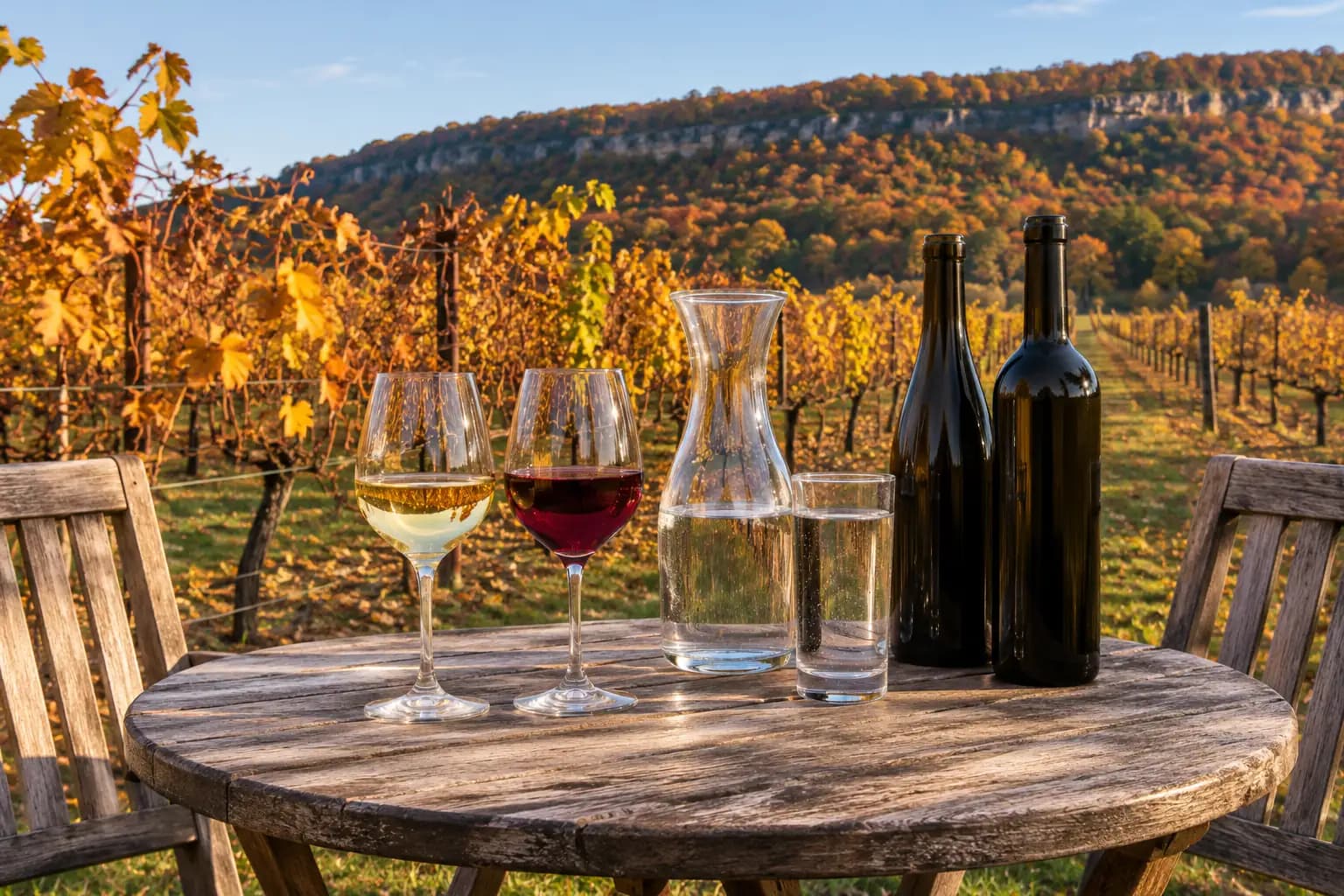
What does VQA mean? VQA stands for Vintners Quality Alliance, and on an Ontario bottle it tells you the wine was made from 100% Ontario-grown grapes, then tested and tasted before it was allowed to carry the name. If a bottle says it's from Ontario but doesn't carry VQA, read the small print: it may be an International Blend that's mostly imported wine.
Harvest is wrapping up across Ontario's vineyards this week, so it's a good moment to sort out the labels. Below we cover how to read them, the regions and grapes that matter, a swap table for people who usually buy imports, and what to pour with the heavier dinners coming up. The images are original editorial illustrations.
VQA in one paragraph: what the symbol guarantees
VQA Ontario, the province's wine appellation authority, says that "all VQA wines start with 100% Ontario grown grapes". Each wine is tracked from harvest to bottle, and the rules prohibit practices such as adding water or grape concentrate. Before a winery can use VQA terms, the wine goes through VQA's certification process: a lab checks the basic chemistry (sulphites, volatile acidity, alcohol and residual sugar), and a panel of trained wine professionals tastes it blind to make sure it's typical of its category and free of faults. Labels are reviewed too, and the alcohol shown has to be within 1% of the tested figure.
What VQA doesn't promise is that you'll love the wine. VQA itself says the tasting isn't like a competition or a critic's score. Think of it as a guarantee of origin and a basic quality check, not a gold medal.
VQA vs 'International Blend': reading the label
This is the part that trips people up. Some wines made by Ontario wineries are blends of Ontario grapes and imported wine. According to the Grape Growers of Ontario, these International Domestic Blends may contain up to 75% imported wine, and each bottle must contain at least 25% Ontario grapes. The label reads one of two ways:
- <strong>International blend from imported and domestic wines:</strong> imported wine makes up the larger share.
- <strong>International blend from domestic and imported wines:</strong> Ontario wine makes up the larger share.
Neither label is a trick, and some of these blends are perfectly decent everyday wines at a lower price. They just aren't the same thing as Ontario wine. The Grape Growers of Ontario also note that only VQA wines can use the word "Ontario" on the label, so if you want local, look for the VQA letters with a region name between them, such as VQA Niagara Peninsula.
Ontario's wine regions in brief
Ontario has three main appellations, plus a sub-appellation on Pelee Island that often gets talked about as a region of its own. A wine labelled with one of the main appellations must be mostly from there (for Niagara Peninsula, more than 85% Niagara grapes, with the rest from elsewhere in Ontario). A sub-appellation on the label means 100% of the grapes come from that smaller area, according to VQA's labelling rules.
Niagara Peninsula
The big one, with the largest planted area of any viticultural area in Canada and roughly 55% of Ontario's VQA wineries. Lake Ontario and the Niagara Escarpment shape the climate: the lake keeps autumn warm enough to stretch the growing season and holds back spring buds until frost risk has passed. You'll see ten sub-appellations on labels, including Beamsville Bench, Twenty Mile Bench, St. David's Bench and Four Mile Creek. Riesling, Chardonnay, Gamay, Pinot Noir and Cabernet Franc are the classics here.
Prince Edward County
Ontario's most northerly appellation, around the Bay of Quinte east of Toronto. The soils sit over limestone bedrock, and the County has built its name on Chardonnay and Pinot Noir, with Pinot Gris and Cabernet Franc also common. Niagara vs Prince Edward County wine, in short: Niagara gives you more range and more bottles to choose from, while the County is smaller and more focused, and its wines tend to be leaner and more mineral in style.
Lake Erie North Shore
The most southerly wine region in Canada, running along Lake Erie from Amherstburg to just east of St. Thomas. It gets the most heat of any Ontario growing area, which suits fuller reds. Riesling, Cabernet Sauvignon, Cabernet Franc and Chardonnay are common, and Merlot and Syrah do well.
Pelee Island (South Islands)
The nine islands of the Town of Pelee Island form the South Islands sub-appellation, part of Lake Erie North Shore since July 2015. VQA Ontario says it has the longest growing season of any wine appellation in Canada, with harvest often starting in August, two to three weeks ahead of the mainland.
The grapes Ontario does best
Ontario is a cool-climate wine region, and the best Ontario grapes are the ones that like it that way. If you're choosing a first bottle, start with these five.
- <strong>Riesling:</strong> Ontario's calling card. Bright acidity, citrus and apple, made anywhere from bone dry to off-dry. Check the back label or ask about sweetness if it matters to you.
- <strong>Chardonnay:</strong> made in every style, from crisp and unoaked to rich and toasty. The County and the Niagara benches are where we'd look first.
- <strong>Cabernet Franc:</strong> Ontario's most reliable red. Red fruit, a bit of pepper and herbs, medium body. It also goes into Bordeaux-style blends.
- <strong>Gamay:</strong> light, juicy and easy with food. It takes a slight chill well, which makes it a good red for people who usually drink white.
- <strong>Pinot Noir:</strong> delicate, earthy, red-fruited. Expect lighter and more savoury than a warm-climate Pinot.
If you like Sauvignon Blanc, Malbec or Pinot Grigio, try these Ontario styles
Ontario vs imported wine doesn't have to be a choice. Here's a simple way to find an Ontario bottle that matches what you already buy. These are style matches, not a claim that J&J stocks every wine on the list.
| If you usually buy | Try this VQA Ontario style | Why it works |
|---|---|---|
| Sauvignon Blanc | Dry Riesling | Same zippy acidity and citrus, with less of the grassy note |
| Pinot Grigio | Pinot Gris or unoaked Chardonnay | Light, crisp and food-friendly, with a little more texture |
| Oaked California Chardonnay | Barrel-aged Niagara or County Chardonnay | Same creamy, toasty style, usually fresher |
| Malbec | Cabernet Franc or a Lake Erie North Shore red blend | Dark fruit and enough structure for red meat, less heavy |
| Beaujolais or light Italian reds | Gamay | Juicy, low on tannin, happy with a slight chill |
| Burgundy or Oregon Pinot Noir | Prince Edward County or Niagara Pinot Noir | Light body, earthy red fruit |
| Champagne or Prosecco | Ontario traditional-method sparkling | Fine bubbles and crisp acidity for toasts |
If you're stuck between Sauvignon Blanc and Pinot Grigio in the first place, our Sauvignon Blanc vs Pinot Grigio guide breaks down the difference.
Pairing Ontario wine with fall and early-winter dinners
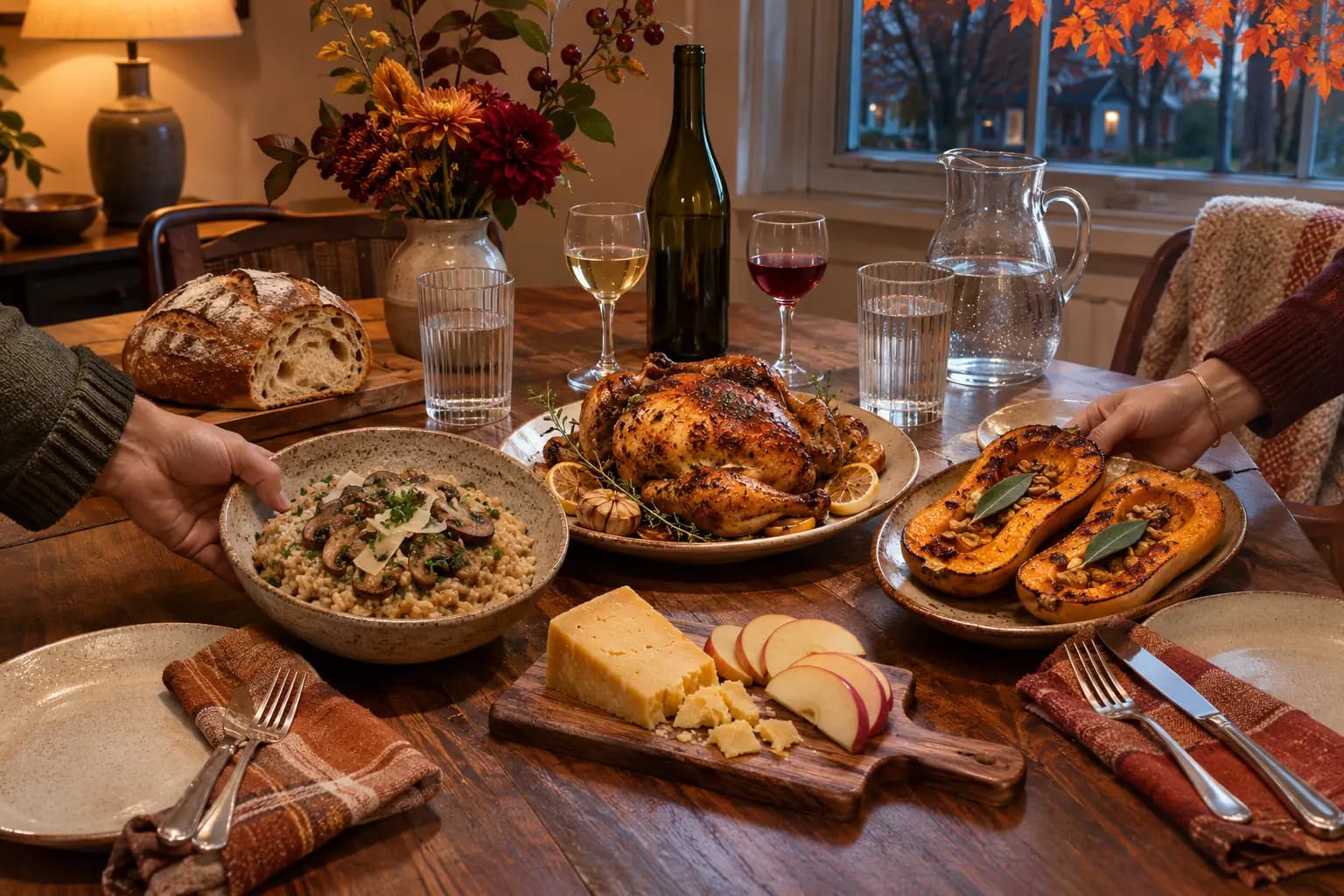
Ontario's acidity is its biggest strength at the table. It cuts through butter, cream and roasted fat in a way that heavier, riper wines often don't.
- <strong>Roast chicken or turkey:</strong> Chardonnay or Pinot Noir. If you had a hit at Thanksgiving, our Thanksgiving wine pairings work for any roast dinner.
- <strong>Mushroom risotto, squash or root vegetables:</strong> Pinot Noir or Gamay.
- <strong>Braised beef, short ribs or a stew:</strong> Cabernet Franc or a Bordeaux-style blend.
- <strong>Pork with apples, or a spicy curry:</strong> off-dry Riesling.
- <strong>A cheese board:</strong> Riesling for soft and washed-rind cheeses, Cabernet Franc for aged cheddar.
Hosting more than a couple of people? Our guide to wine for a dinner party covers how many bottles to buy and what order to pour them in. Put a water jug on the table and at least one alcohol-free option, and if you want to make a game of comparing two Ontario bottles side by side, our wine-tasting tips keep it simple.
A note on icewine (more in our winter guide)
Icewine is the Ontario wine most people outside the province have heard of. Under VQA rules the grapes have to freeze naturally on the vine and be picked at -8°C or colder, and the pressed juice has to reach a high sugar level. Picking happens in the depths of winter, so we'll give it a proper post closer to the season. For now: it's a sweet wine for small pours, usually with dessert or cheese.
FAQ: Is VQA better? Is Ontario wine sweet? Where do I find VQA in a catalogue?
Frequently Asked Questions
Is VQA wine better than non-VQA wine?
VQA guarantees origin (100% Ontario grapes) and that the wine passed lab tests and a blind tasting for faults and typicity. It isn't a ranking. A good International Blend can beat a dull VQA bottle, but only VQA tells you the wine is truly from Ontario.
Is Ontario wine sweet?
Not as a rule. Chardonnay, Cabernet Franc, Gamay and Pinot Noir are usually made dry. Riesling is the one to check, since it ranges from dry to off-dry. Icewine and late-harvest wines are sweet by design, and their labels say so.
What's the difference between Canadian wine and an International Blend?
A VQA Ontario wine is made from 100% Ontario grapes. A wine labelled "International blend from imported and domestic wines" can be up to 75% imported wine, with at least 25% Ontario grapes.
Where do I find VQA in a catalogue?
Look for VQA and a region name in the product name or details. In our own catalogue, an origin like Niagara refers to where the producer is based, not VQA status, so check the label or call us at (437) 328-0030 if VQA matters to you.
Can I get wine delivered tonight?
Yes. We deliver across the GTA 24/7, and delivery is free on orders over $150. Our drivers check ID at the door: whoever receives the order must be 19 or older with valid photo ID.
Ready to try one? Browse our wine selection, or call or WhatsApp (437) 328-0030 and we'll help you pick a bottle for dinner. Plan the ride home before the first glass.
By J&J Alcohol Delivery
Back to BlogKeep Reading
More Articles
Beaujolais Nouveau
Beaujolais Nouveau 2026 and Ontario Gamay: What It Is, When It Arrives and What to Serve It With
Beaujolais Nouveau 2026 is released Thursday, November 19. What it is, how it differs from Beaujolais-Villages…

Grey Cup
Grey Cup Party at Home: Beer, Batch Drinks and Food for a GTA Watch Party (2026 and Next Year)
The 113th Grey Cup kicks off Sunday, November 15 at 6 p.m. ET. How much beer to buy for the evening, a batch C…